
It’s easy to understand why freelancing is such an attractive career path for hundreds of millions of people all over the world. People can set their own hours, work from wherever they want, and have far more control over the projects they take on than traditional employment can offer.
I should know: I’ve been doing it for 7+ years!
But as the freelancing industry continues to grow and evolve (and as AI works its way into every corner of that industry), it’s worth thinking about what the future of freelancing looks like. And whether now is the right time for you to become a freelancer.
Does Freelancing Have a Long Future Ahead of It?
I started freelancing in 2019 while I was still at university. I’ve watched the career path evolve throughout the COVID-19 pandemic, with many people turning to freelancing as mass layoffs ensued and remote working became the norm.
But it’s worth noting that freelancing was expected to grow into the future even without the pandemic’s help. Surveys from back in 2017 suggested half the American workforce would be freelancing by 2027.
Whether that ends up being true remains to be seen (although some studies suggest it’s almost there), but there’s no doubt that freelancing has a long future ahead of it in some capacity. As more and more people look for alternative or additional income sources, people are trying their hand at offering things on a freelance basis.
Okay, but won’t that just mean more competition?
Well, brands and individuals are always looking for cheap ways to get things done. And hiring a freelancer on a contract basis can be a very cost-effective way to do this versus hiring a new employee.
But there are some big things happening in the world that will affect the future of freelancing. Yes, I’m talking about AI.
The Emergence of Powerful AI
AI is changing the freelancing landscape significantly. As a freelance writer, I am all too aware of the effects of platforms like OpenAI’s ChatGPT and the countless other chatbots and AI platforms. I’ll talk more about them soon (and I have another article on the future of freelance writing specifically).
But for now it’s just worth pointing out that any discussion of the future of freelancing (or the future of anything really!) must mention artificial intelligence. (Whether we like it or not.)
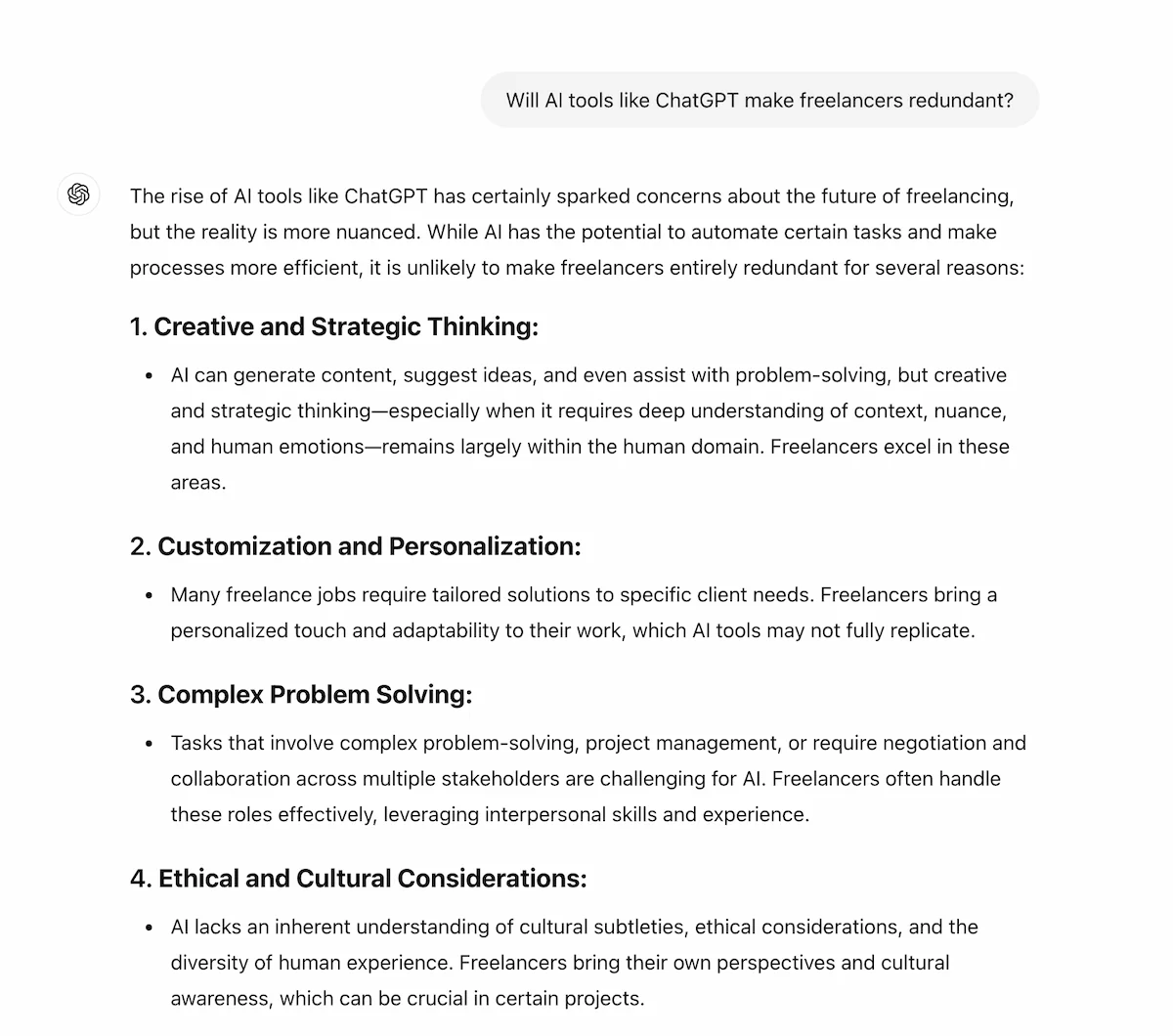
This is part of the reason that I have shifted a good chunk of my work towards video creation. Check out my article on freelancing skills if you want to discover more ways to expand your own services.
What About Freelancing Platforms?
Freelancing platforms like Fiverr and Upwork will continue to remain popular in the future despite these emerging technologies and cultural trends.
But they will also evolve as people’s needs change. The market will be somewhat split between people that want low-quality for cheap and those that may be willing (or forced) to pay even more to ensure they get a human doing the standard of work they need.
I’ll talk more about how these platforms will be affected soon.
Will Freelancing Continue to Grow?
With the flexibility and often higher earnings that freelance work offers, it’s no surprise that the number of freelancers is still on the rise. According to a report by Upwork, the world’s largest freelance marketplace, the share of workers in the US that are freelancers is up at 38% as of 2023. Up from 35% back in 2019.
Update: Looks like it’s still 38% as of Upwork’s 2026 report.
One of the reasons for the growth in freelance work is the impact of the COVID-19 pandemic on traditional office jobs. As companies adapt to new ways of working, many have turned to freelancers as a means of getting work done without having to take on full-time staff.
I’d expect this to continue as companies embrace the benefits of the gig economy, such as the ability to hire workers on a project-by-project basis and the savings of not having to provide benefits or office space. At least those companies that realize freelancers strike a good balance between cost-effective but still high-quality, and cheap but low-quality AI substitutes.
Note: I don’t doubt that, even without the pandemic, companies would still be increasingly turning to freelancers as an easy way to get fast access to high levels of expertise.
Freelancing Is Increasingly Easy to Pursue
Another factor contributing to the growth of freelancing is the advancement of the technologies that freelancers use. Freelancers can market themselves and work remotely from anywhere in the world. This means that more people are able to work as freelancers, regardless of where they live, as long as they have access to the internet.
Aside from the actual freelancing itself becoming easier (in some ways), we also have more and easier access to information than ever before. This means people can gain knowledge and support about freelancing very easily (like through this blog 😉). And so more and more people can become aware of it as a career path.
Freelancing Is Also Increasingly Attractive to Pursue
There’s also something to be said about the fact that freelancing is an attractive career path for many students that might not see a clear future ahead of them in employment. In some fields, this may be more apparent than others, in particular those that are heavily impacted by AI.
Job security in many industries is not what it used to be. Going freelance can represent a great alternative for those struggling to get a traditional job straight out of school, college, or university.
The Future of Freelance Platforms
As the gig economy continues to flourish, freelance platforms like Fiverr and Upwork have become increasingly popular among businesses and professionals alike. But what does the future hold for these platforms?
With the rise of automation and artificial intelligence, there’s (valid) concern that freelance platforms may become obsolete, at least for some industries. But these platforms are continuously evolving and adapting to stay relevant (and making use of AI themselves to improve efficiency).
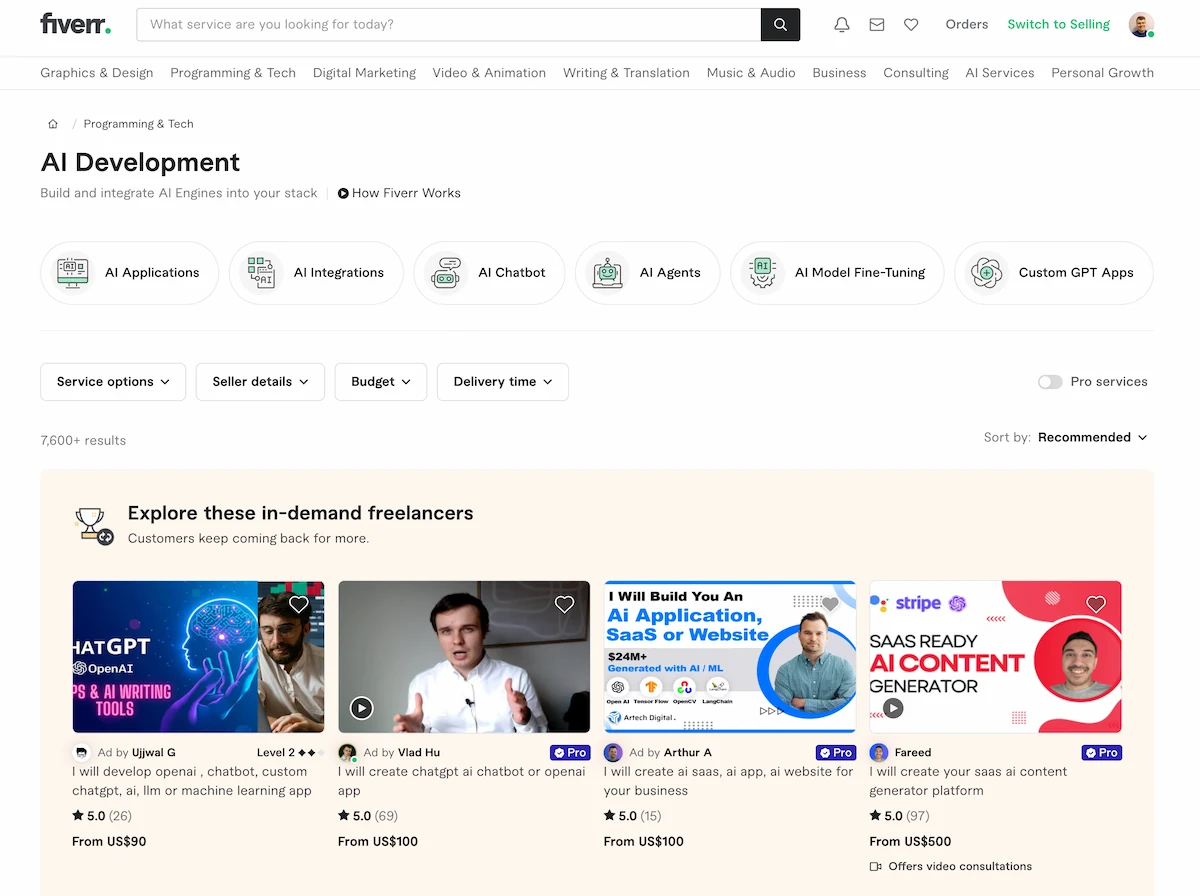
For example, Fiverr has entire sections of the website devoted to trending services, from AI app development to optimization for AI search engines.
Specialization
One trend that is sure to continue is the demand for specialized skills. Platforms such as Toptal and YunoJuno have already established themselves as marketplaces for top-tier freelance talent. They use rigorous screening processes to make sure only the best candidates are accepted, regardless of industry.

But even if you’re using platforms like Fiverr or Upwork, I believe there will be continued demand for freelancers that can offer services at all levels, from basic to advanced, cheap to expensive. AI might replace the need for some low-level work, impacting the likes of freelance writers and possibly graphic designers the most.
However, AI is still very much in its infancy in terms of its capabilities when it comes to producing highly specific things. It might be able to write a generic article or produce a cool image. But it’s still pretty basic unless you devote a lot of time, money, and resources to it.
There are obviously people out there that can do some crazy impressive stuff with AI. But that just backs up my point that being highly skilled at what you do is only going to become more important.
I think those with expertise and specialized skills will simply become more highly sought-after, including if your skills revolve around AI itself.
How Will AI Affect The Future Of Freelancing?
Firstly, we need to recognize that AI is already changing the way freelancers work. And it has been for a long time. In particular, writing is an area where AI is having a significant impact. AI tools are now being used to create content automatically, from news articles to social media posts.
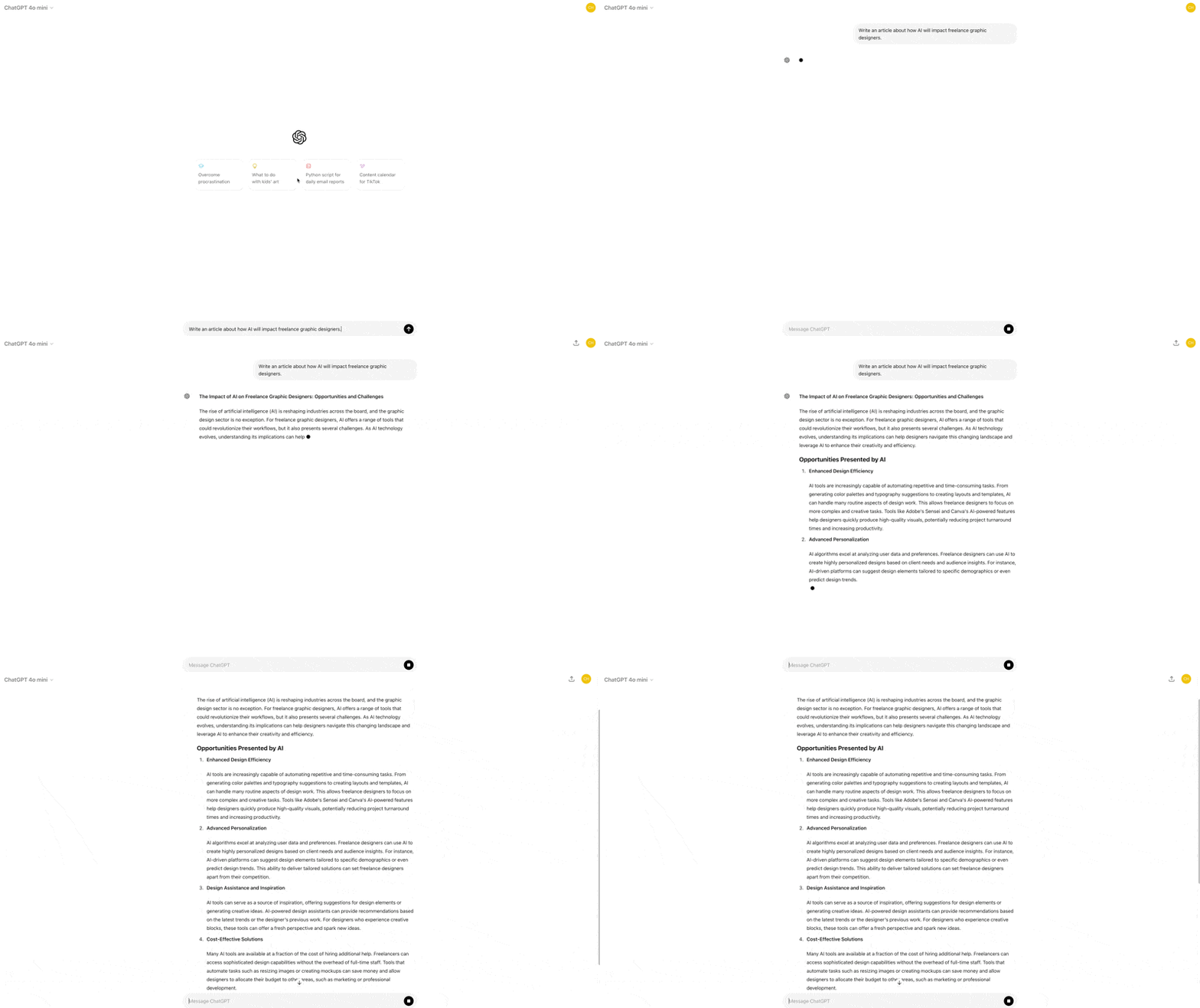
While some may see this as a threat to the livelihoods of freelance writers, I believe there is an angle to see it as an opportunity.
AI-generated content is often formulaic and lacks the nuance and creativity that human writers can bring to their work. I’m not just talking about AI tells like em dashes, but the intangible quality of a piece when it’s written by someone that truly knows the craft. As a result, there will always be a demand for skilled writers who can produce high-quality content that engages and entertains readers.
In other words:
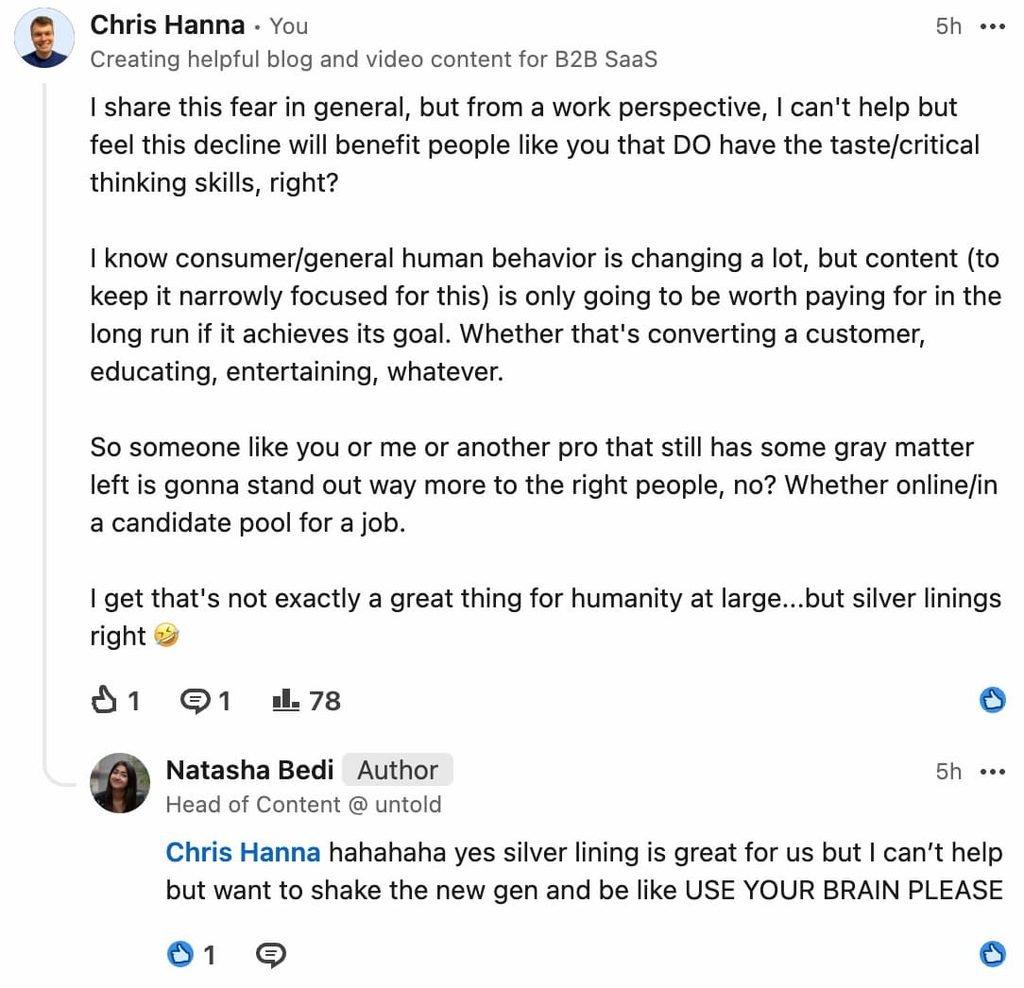
The rise of AI-generated content means that freelancers who can offer a unique perspective or expertise in a particular niche will become even more valuable. I just made this point in a LinkedIn comment earlier today on a post discussing a fear about the next generations being overly reliant on AI to do their thinking for them:
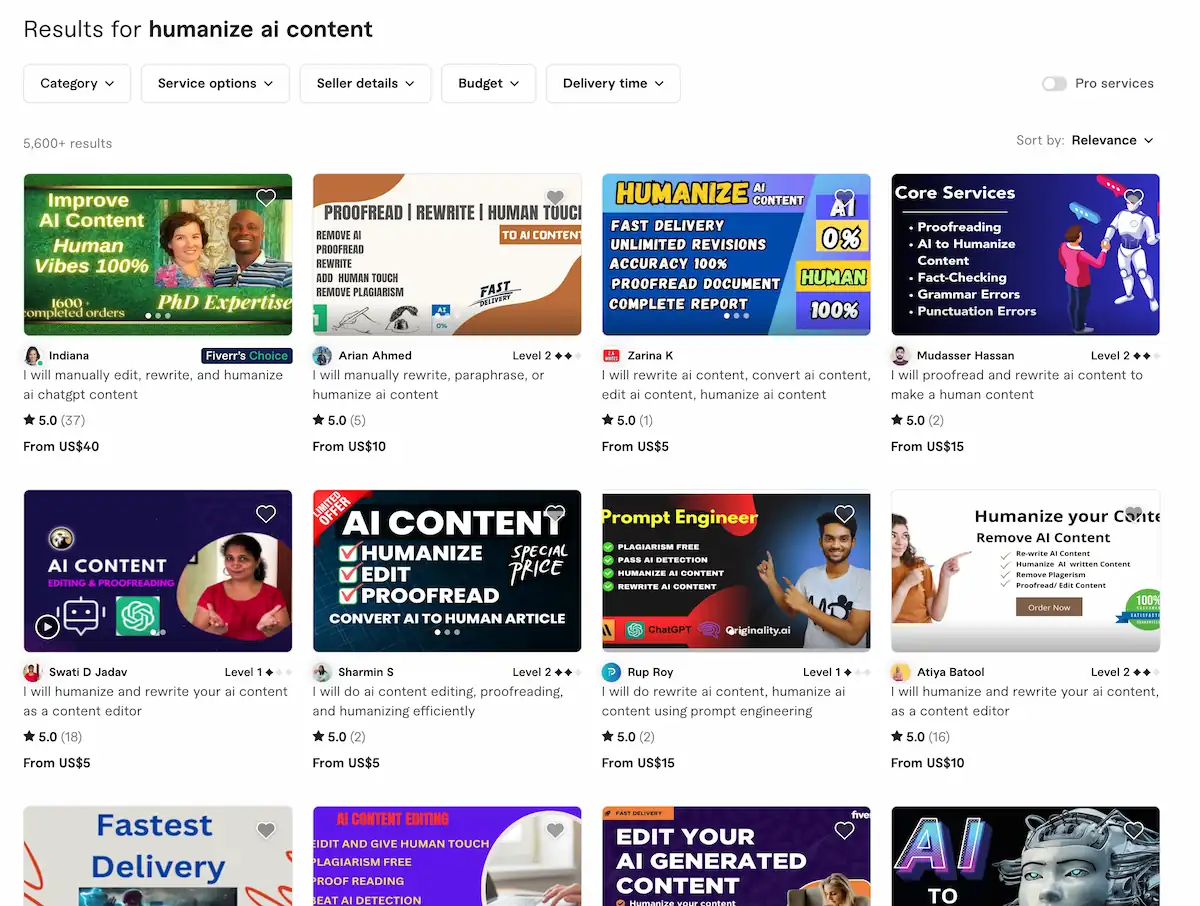
The shift may also lead to new job opportunities for freelance editors and others who can optimize AI content to read more like a human wrote it (these gigs already exist on Fiverr, for example).
Matching Clients to Freelancers
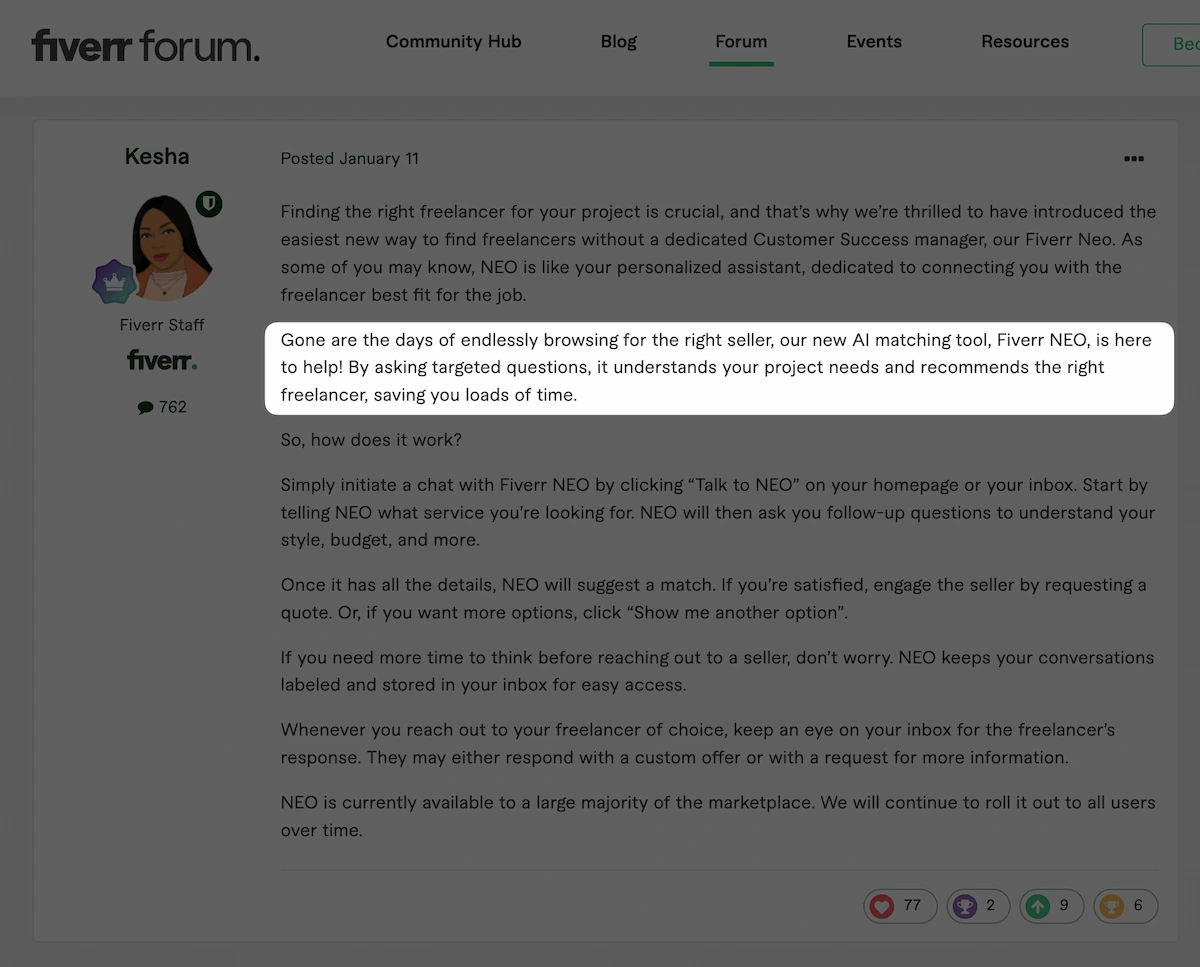
AI is also changing the way that freelancers find work. Platforms like Fiverr and Upwork revolutionized the way that freelancers connect with clients, making it easier than ever to find new projects. But as AI continues to improve, it’s likely that these platforms will become more sophisticated, allowing clients to find the right freelancer for their needs automatically.
Most platforms already use some form of matchmaking system. But as AI improves, it will get better and better at matching clients with the right freelancers. This has the potential to further automate these platforms and help everyone get better results for their business.
Fiverr started doing this with their NEO matchmaking system in 2024:
A Split in the Market
I also believe that AI will lead to a split in the freelancing market. On the one hand, there will be clients who are happy to pay low rates for low-quality work produced by AI. There are already and have been for a long time many businesses and individuals that pay low rates for low-quality work, and then they upgrade it themselves or simply use it as is.
On the other hand, there will be clients who are willing to pay a premium for high-quality work produced by skilled human freelancers. This split will be particularly pronounced in industries where reputation and brand management are crucial, like marketing and public relations. And for big brands that can’t afford to skimp on output quality in the hopes of saving some cash.
In these industries, the need for high-quality, original content will remain high. And clients will be willing to pay top dollar to ensure that they get the best possible result. This goes for writing and creative freelancing industries, as while AI is impressive, it cannot think like a human can, and it doesn’t have taste. And that human quality is often what sets the biggest brands apart from the rest.
New Roles
Finally, the AI revolution may result in new opportunities for freelancers in place of many of the old ones. AI-content editors will become more sought-after. And brands might need someone who can prompt AI image and video tools effectively to produce the material they need.
There will also be lots of opportunities that we’re simply not aware of yet!
AI is changing the freelancing industry in many ways, but I do not believe it will destroy it.
Freelancing Does Have A Future
Freelancing has a long history, but with rapid advancements in technology and culture it’s understandable to wonder what the near future holds.
I believe the future of freelancing is long and prosperous for both sides of the market. But you will need to adapt to new technologies and cultural shifts if you want to succeed.
Freelance Ready is reader-supported. That means some links on this website are affiliate links. If you sign up or make a purchase through these links, we may earn a commission.

Chris is the creator of Freelance Ready. He originally started freelancing (on Fiverr) while at university in 2019. He created this website to share his freelancing experience and help others on their own self-employed journeys. Chris now provides content consultancy for B2B SaaS brands, creating blog posts and YouTube videos. You can learn more about Chris here.