
I’ve been freelancing since 2019, and in this guide, I’ll share everything I wish I’d known when I decided to become a freelancer. Some of it I’d do exactly the same again. A lot of it I’d do differently.
Heads up before we start: This guide assumes you’ve already decided freelancing is right for you. If you’re still weighing that up, check out my guide on the pros and cons of freelancing first. In this post, I’m going straight into the how.
Let’s get into it.
1. Decide What You Want to Offer
Before you do anything else, you need to know what you’re actually going to offer as a freelancer. That means taking stock of the skills you already have, whether that’s writing, design, development, video editing, or something else entirely, and being honest about which of them people would actually pay for.
(Although, if you’re reading this, I imagine you already know which skill you plan to sell!)
I started out as a freelance writer, because that’s where I felt I had the most value to offer. I still spend about 50% of my time on writing tasks, but these days I’m also creating video content for big brands. So your skill set can (and will) evolve over time.
But most of my early years were spent doing exactly what I started with. It’s tough to build up experience and client relationships if you keep switching what you offer. Usually you need to build credibility in one skill first, whatever that skill is, before branching out.
Your freelancing success then hinges on your ability to deliver high-quality work consistently via that skill.
Investing in your skills is a continuous process though. So you don’t necessarily need to be a master of the skill to get your first clients. There are lots of ways to pick up new skills and knowledge (beyond learning on the job).
Common ways to learn freelancing skills include:
- YouTube videos (super useful and free)
- Courses (on websites like Udemy or Coursera)
- Industry blogs (like this one!)
- Following experts on social media
- Having discussions in forums
A big part of the work I do involves search engine optimization (SEO), and I devote time each day to continuously learning and improving upon my skills and knowledge in that area, so I can keep raising the bar for my clients (spoiler: that’s also Step 8 on this list).
This can involve learning from others through courses and other resources, but also by following people in the industry on social media. This creates a sort of “passive learning” process, so I’m always picking up new things even just scrolling through my social media feeds!
2. Define Your Target Market
Once you know what you’re offering, the next thing to nail down is who you’re offering it to.
Research your potential clients thoroughly, answering questions like:
- Who are they?
- What are their pain points, challenges, and preferences?
- Do they really need your services?
- What industries do they operate in?
- What are their budgets like?
Knowing your target market allows you to tailor your services, marketing efforts, and communication to meet their needs effectively. But it also shows you whether there really is a big enough market.
As you define your target market, consider creating buyer personas. These are detailed profiles that represent your ideal clients.
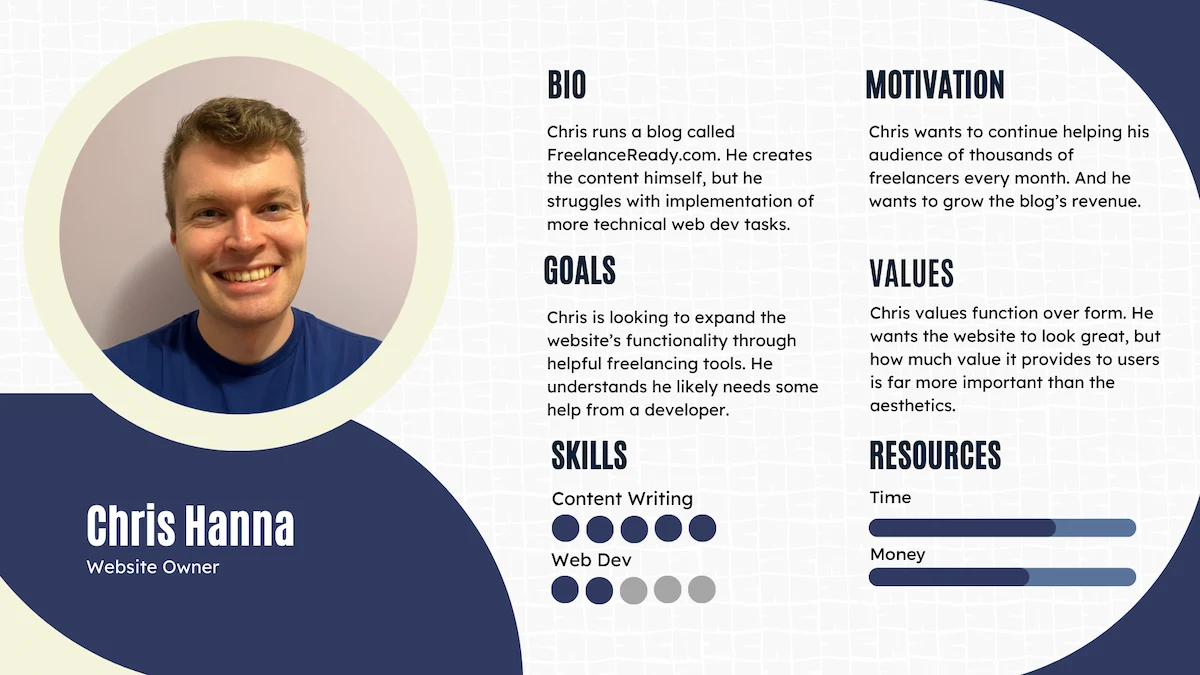
You can go the extra mile and actually create imaginary profiles, but the key things to consider are:
- Are they individuals or business owners?
- What industry are they in?
- Where are they located (if relevant)?
- Are they big spenders or will they likely be on a budget? (This will obviously affect your pricing potential)
- What specific problems do they face?
- What specific solutions can you offer?
Beware of Being a Generalist
Part of defining your market is deciding how narrow to go. If you haven’t settled on a specific niche yet, you can market yourself as a generalist instead. But beware: there are lots of generalist freelancers out there, meaning it’s ultra competitive and sometimes a race to the bottom in terms of rates (see Step 4 for more on setting these). This is common in the writing industry, where I first started freelancing on Fiverr.
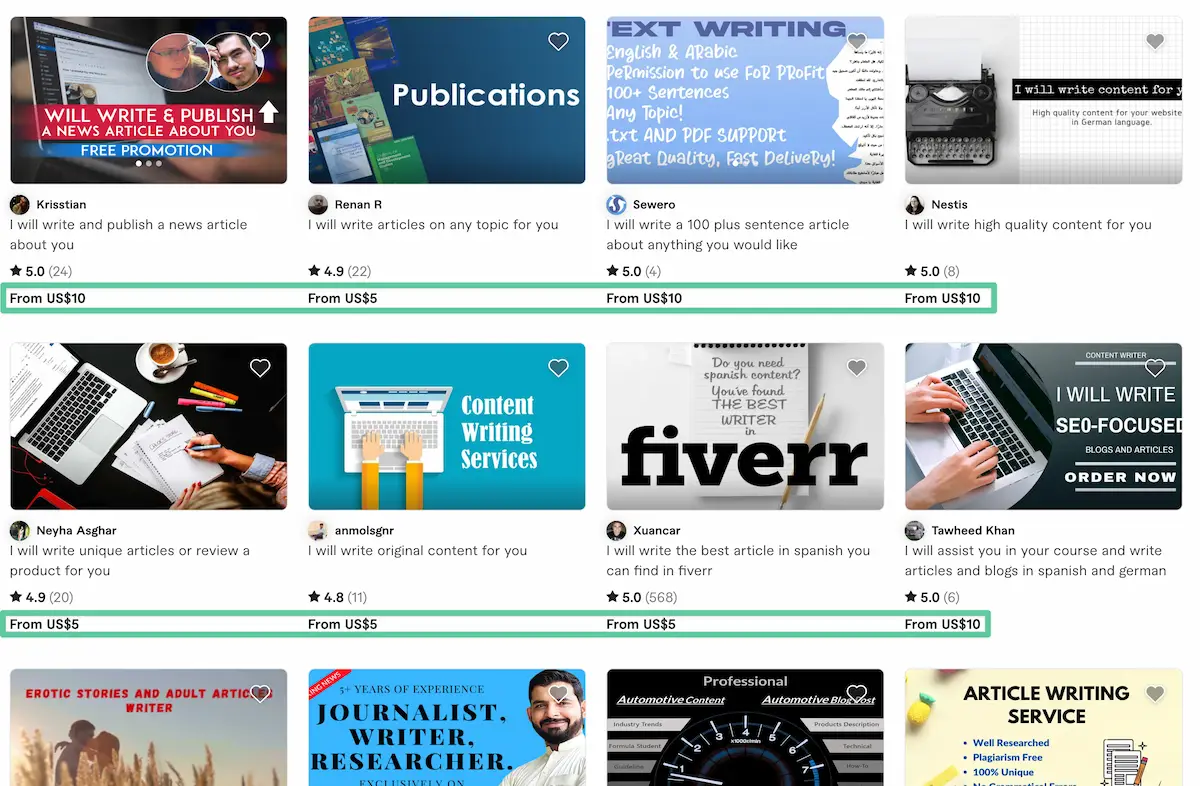
I’d be sitting in uni lectures writing content for buyers on Fiverr on all kinds of topics. From ecommerce stores selling furniture to blog posts on finance websites. It helped me get my start, but the pay was low and it was ultra competitive (see screenshot above).
I’m still grateful for that time, but within a year I’d moved on to more niche-specific writing. Not only did it pay more, but it was also far more enjoyable as I could really immerse myself in the niches.
This goes for freelancing roles beyond writing too. If you’re looking to become a freelance graphic designer, consider niching down to designing graphics for marketing campaigns. Or logos for small businesses.
If you want to become a freelance developer, maybe you could niche down to building websites for businesses. Or focus on app development.
3. Showcase What You Can Do With a Portfolio
“You need experience to get the job, but you need the job to get experience.”
Sound familiar?
You might be wondering, how the heck do I build a portfolio if I’m not even freelancing yet?!
Well, if you don’t have any samples (which is likely if you’ve never had a paying client before) create some of your own.
Build mock websites if you’re a web developer, write sample blog posts if you’re a writer, or design logos for imaginary businesses if you’re going into graphic design. Not having experience doesn’t mean you can’t show off your skills, it just means you have to get a bit creative.
Once you’ve got something to show, whether that’s real client work or samples you made, present it in an organized, visually appealing way. Select a range of pieces that show your versatility within your niche, and give each one a brief description covering the project’s context, your role, and the results you achieved.
How to Create a Freelancing Portfolio
There are lots of ways to make a freelance portfolio, with the most obvious but highest-effort being to build your own website. You can do this fairly easily nowadays with the likes of WordPress and the many other website builders out there. You can even vibe code one using a tool like Lovable (I did that with my portfolio!).
But there are also platforms like Medium that are great for freelance writers, and dedicated portfolio platforms like Contently.
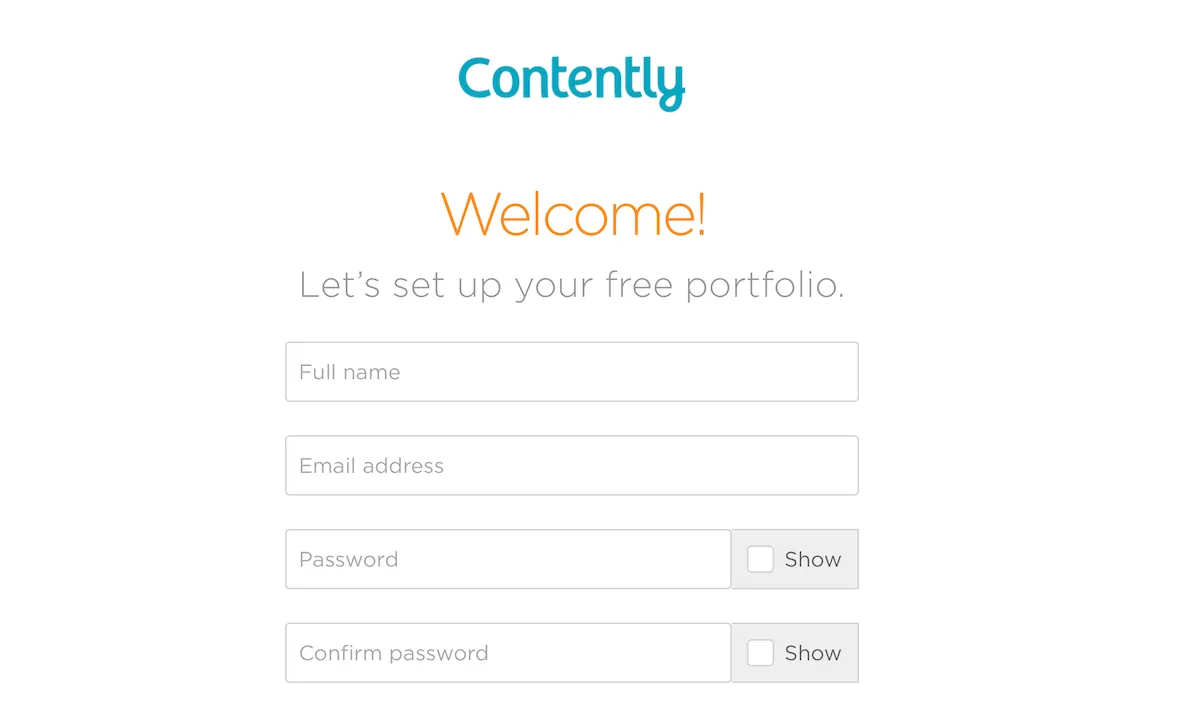
Pro Tip: Regularly update your portfolio as you complete new projects or achieve milestones in your career.
4. Set Your Freelancing Rates
Your freelancing rates should reflect the value you provide while remaining competitive within your niche. This is easier said than done, especially when you’re first starting out. You don’t yet know the value you provide, and “competitive” is hard to judge when the freelancers you’re benchmarking against are miles ahead of you, charging rates you’re clearly not ready to charge yet.
Start by researching industry standards and analyzing what other freelancers with similar skills and experience charge. This research can provide a baseline for setting your rates.
Consider asking in forums or communities to get answers from people in similar situations with the same kind of experience.
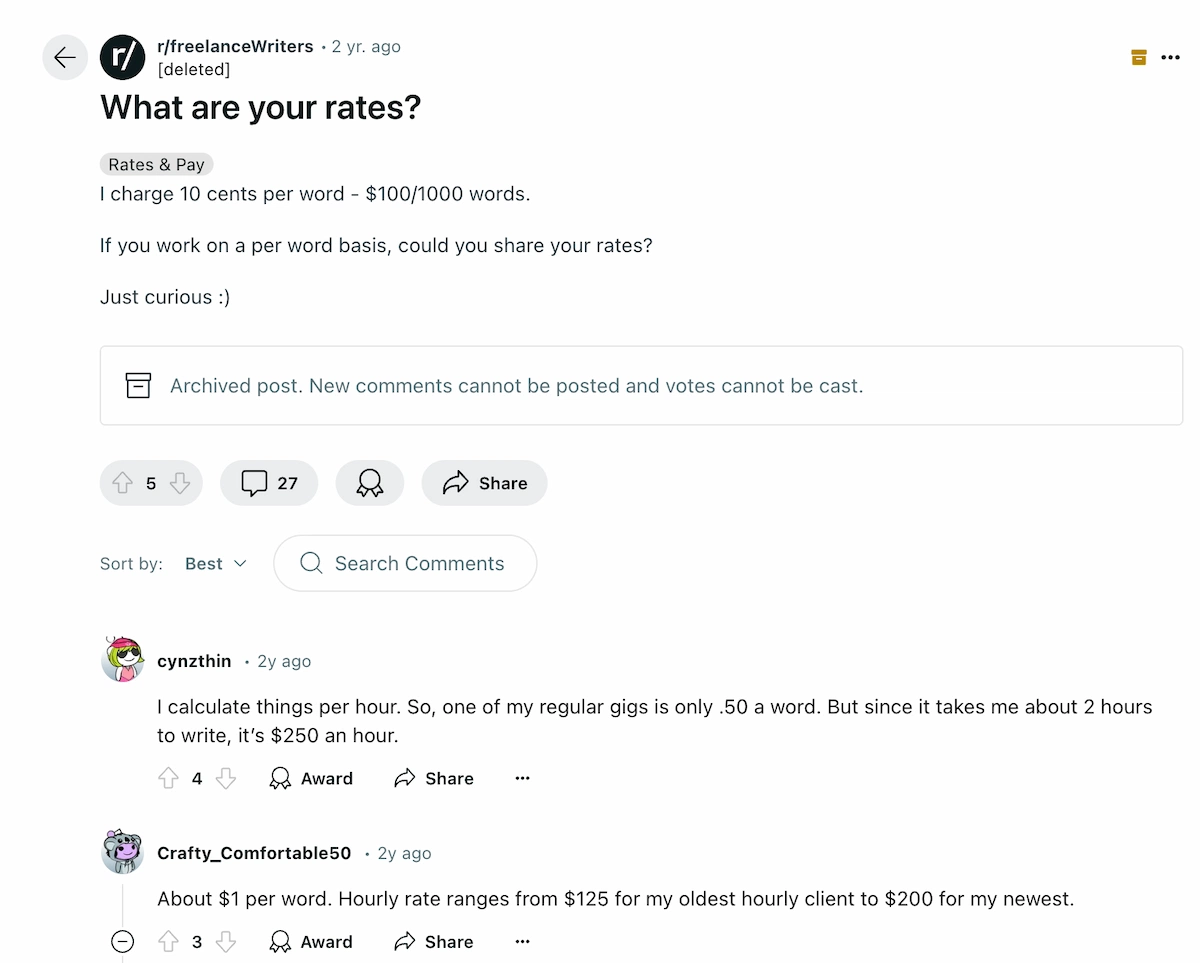
When setting your prices, consider your financial goals, cost of living, and freelance business expenses. You might choose to charge hourly or per project, or based on the value you bring to the client. Or per word if you’re a freelance writer.
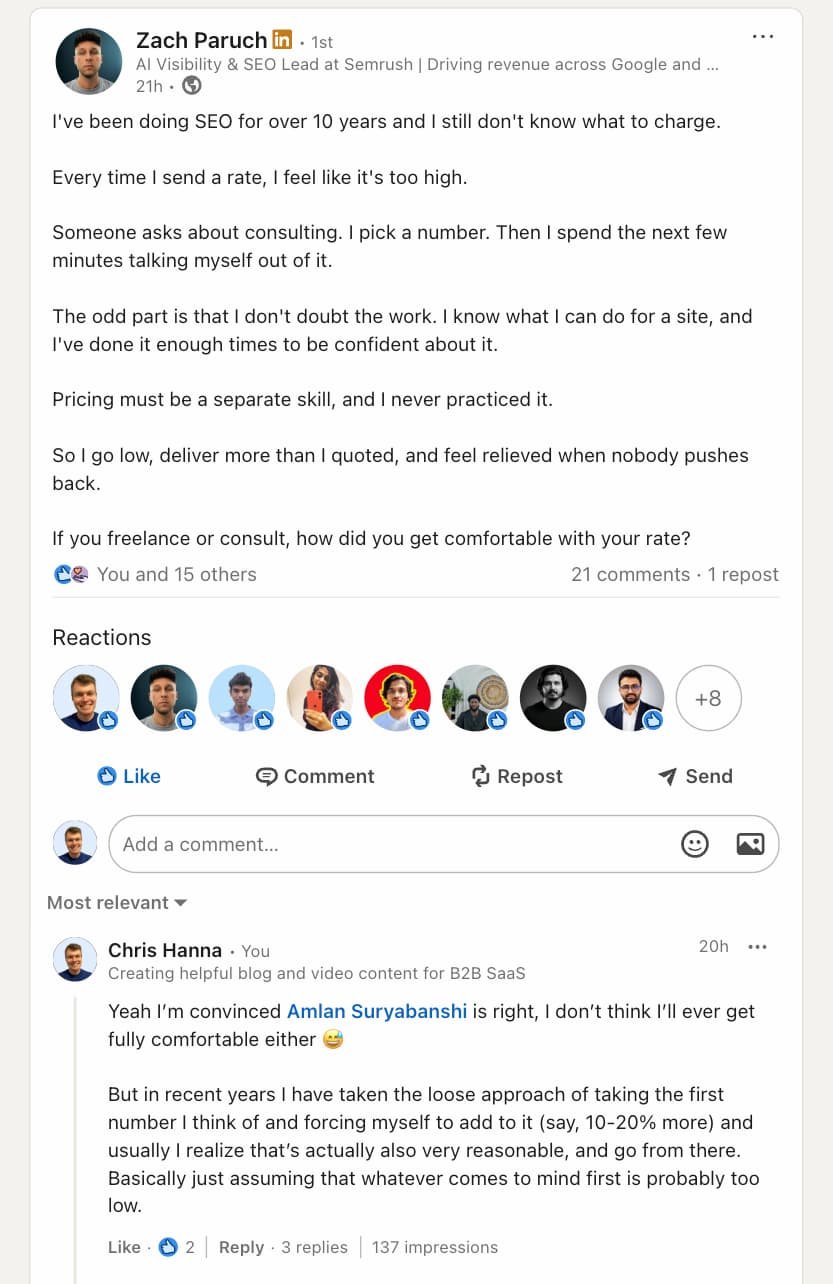
Remember that your rates can and should evolve as your skills and experience grow. Don’t be afraid to adjust them accordingly to reflect your increasing expertise and the demand for your services. I’m still changing my rates all the time, and I still get uncomfortable asking for increases. And I know I’m not alone, since I actually had a discussion with other contractors about this on LinkedIn just yesterday:
My Experience
A cautionary tale: don’t set your prices too low!
As I mentioned at the start of the article, I got my first few freelancing clients on Fiverr. It’s a freelance marketplace, and while it can be a great place to start as a beginner freelancer, it’s very competitive and notorious for being home to many cheap freelance services.
Back when I first started, I was one of those cheap freelancers. My first job on the platform—a writing gig—made me a whopping $2 per hour!
Sustainable? No chance!
Necessary? Probably not.
Regrettable? Somewhat.
I felt I had to charge low prices if I wanted to get any clients without much of a reputation behind me. Maybe I did, but I imagine if I had raised my prices to be at least a little closer to minimum wage and persevered, I would have gotten some clients under my belt.
Thankfully I didn’t have to work at these rates for long. But it did take a while to get above $10 per hour for my writing. I was also working part-time in a local shop, so I had some extra income anyway.
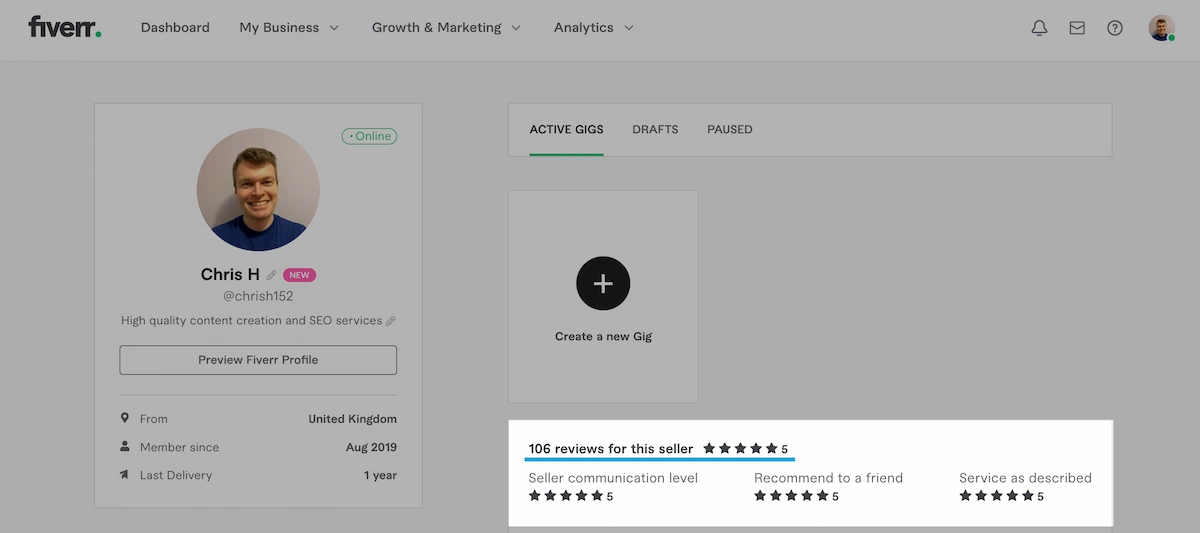
But eventually, I racked up 100+ five-star reviews with some high-paying clients along the way, before I gradually moved away from the platform to external clients.
So, if you’re diving into freelancing with no other income sources, really take some time to consider your rates to ensure you don’t price your services in a way that’s not sustainable.
5. Register Your Business
Before you start taking on paid work, it’s worth getting the basic admin sorted. In the UK, that usually means registering as a sole trader with HMRC (or setting up a limited company if that suits you better), which lets you invoice and pay tax properly from day one. If you’re elsewhere, check what the local equivalent looks like for you.
This doesn’t need to be complicated!
For most freelancers starting out, registering is free and will take you less than an afternoon. You can always change your business structure later as you grow (I recently switched from sole trader to limited company after almost 7 years in business).
While you’re at it, it’s worth setting up a separate bank account for freelance income and picking a simple way to track invoices and expenses, even a spreadsheet is fine to begin with. But there is lots of invoicing software out there you can use as well.
Further reading: Do Freelancers Need a Business License?
6. Get Your First Clients
Securing your first client is one of the hardest parts of freelancing, but everyone starts here. So just remember going in that it’s possible, it just takes some work.
Start by tapping into your existing network. Let friends, family, and any professional contacts know about your freelance services. Personal recommendations and word of mouth can be super powerful for landing your first clients.
But realistically, many of you (like me) will need to look elsewhere to find your first clients. I was still at uni when I became a freelancer. I didn’t have colleagues to turn to or past employers to reach out to, so for me, that meant looking elsewhere. Enter: freelance marketplaces and job boards.
Online freelancing platforms like Upwork, Fiverr, and Freelancer.com connect freelancers with clients seeking specific services.
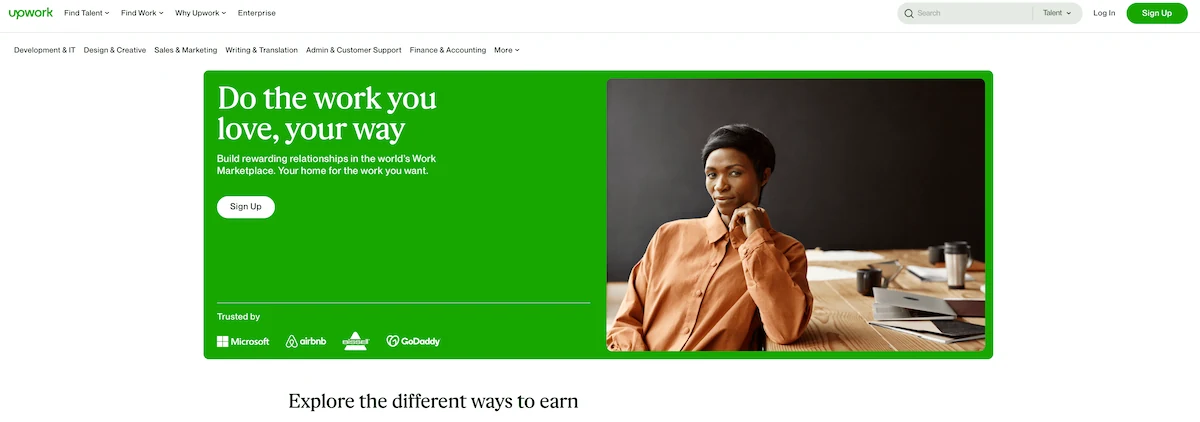
To find success on these platforms, create a compelling profile that highlights your skills, experience, and portfolio (see Step 3). Be proactive in applying for relevant projects and building a reputation for delivering quality work.
There are also niche-specific job boards out there, and I’ve listed a few of them below:
- ProBlogger for writers (and freelance editors)
- 99designs for creative freelancers
- Toptal for technical freelancers (this one is tougher to get into)
A word of warning though: these platforms are beginner-friendly in a lot of ways, but they can also lead to undercharging and difficult clients (I had my fair share). And they take a cut of your pay too. Job boards are often full of fairly low-quality roles as well, and competition has only gotten tougher, especially in industries where AI is eating into demand for certain kinds of work. (Or where you’re competing against other people that provide AI slop on the cheap!)
More and more, I’m leaning towards building relationships directly on LinkedIn and in communities where you can reach out to people and show your work, rather than relying purely on marketplaces. They’re a fine place to start, just don’t expect them to carry your whole freelancing career.
On that note…
7. Build Out Your Network
Building a strong professional network is an ongoing process, and it genuinely helps you build a sustainable freelancing career.
Start by joining online forums, social media groups, and communities related to your niche.
Engage in conversations, share your insights, and look for opportunities to work with other people in your field. You don’t need to post every day. But being active on these platforms is an easy way to show off your experience.
It can be daunting at first, especially when you don’t have much of a network yet. Reaching out to people on platforms like LinkedIn can feel intimidating when it seems like everyone else already has it figured out. But the truth is, we all started somewhere. I never would have guessed I’d end up connected with a lot of the people I’m connected with now! It’s really just a case of sticking with it, engaging in conversations, and sharing what you know, without feeling like you need to post constantly to show up.
Networking isn’t just about finding clients. It’s also about connecting with peers who can provide support and mentorship. Don’t hesitate to reach out to experienced freelancers for advice and guidance. Building a network of mentors and peers can provide valuable insights and help you navigate the ups and downs of freelancing.
8. Keep Learning and Improving
To stay competitive and relevant in your industry, you need to embrace lifelong learning (something I believe is key in all aspects of life, not just freelancing). Dedicate time to expanding your skills and staying updated on industry developments.
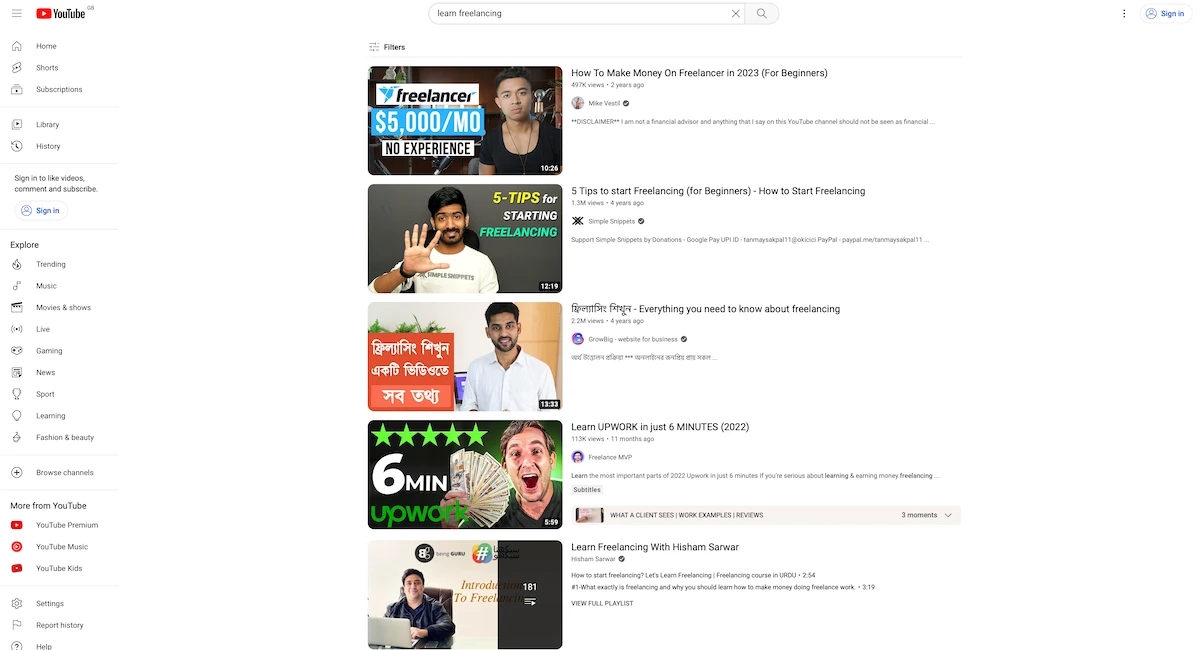
Continuous improvement benefits your clients and also keeps your work fresh and exciting. As I mentioned earlier, formal learning doesn’t need to be the only way. You can also learn from others on social media, YouTube, and other more informal spaces.
From a more direct perspective, you also need to take feedback from clients and peers to identify areas you need to improve.
Embrace constructive criticism as an opportunity to grow and refine your skills (and try not to take it personally). A commitment to learning and improvement will help you retain clients. And it’ll also make it easier to attract new ones seeking the best freelancers in the field.
The Pros & Cons of Becoming a Freelancer
| Pros of Freelancing | Cons of Freelancing |
|---|---|
| Flexibility | Income variability |
| Diverse client base | Lack of job security |
| Autonomy | No employee benefits |
| High income potential | Isolation |
| Location independence | More administrative tasks |
The Pros
Flexibility: Freelancers have the freedom to set their own schedules and work from anywhere, providing a better work-life balance. This is one of the major draws for beginners.
Diverse Client Base: Freelancers can work with a variety of clients, gaining exposure to different industries and projects.
Autonomy: Freelancers have control over their projects, allowing them to choose the type of work they are passionate about. Of course, you’re still going to need to work within a set of guidelines and deadlines from clients.
Income Potential: Successful freelancers can earn a higher income than they might in a traditional job, especially if they specialize in a high-demand niche (but you need to take things into account like expenses and potentially higher taxes).
Location Independence: Freelancers are not tied to a specific location and can work from anywhere in the world, opening up opportunities for travel and exploration. There are obviously exceptions to this if you offer physical services rather than being a digital freelancer.
Note: If you do offer physical services, consider using a marketplace like Taskrabbit to find jobs. See how the platform holds up in our comparison of Fiverr and Taskrabbit.
The Cons
Income Variability: Freelancers often face irregular income, with no guarantee of steady paychecks or benefits. I’ve personally gone through multiple spells of several months with no substantial income (which makes managing your money vital).
Lack of Job Security: Freelancers may experience periods of unemployment or difficulty finding clients, leading to financial instability. This can take its toll on your mental state, as you need to be able to stay focused and motivated when things aren’t going to plan.
No Employee Benefits: Freelancers are responsible for their own health insurance, retirement planning, and other benefits that traditional employers typically provide.
Isolation: Freelancers often work alone, which can lead to feelings of loneliness and isolation. This suits many people and, like the flexibility aspect, is what actually makes a lot of people want to start freelancing in the first place.
Administrative Tasks: Freelancers must handle administrative tasks like invoicing, taxes, and client management, which can be time-consuming and complex. There are invoicing apps out there, but it can be intimidating at first.
How to Start Freelancing With No Experience
To start freelancing without any experience, begin by taking stock of your skills, interests, and passions. Consider what you enjoy doing and where your talents lie. While you may not have direct professional experience, you likely have transferable skills that can be valuable in the freelancing world.
These skills could include:
- Writing
- Graphic design
- Social media content creation
- Customer service
- Data entry
Identifying your strengths will help you determine the services you can offer to potential clients.
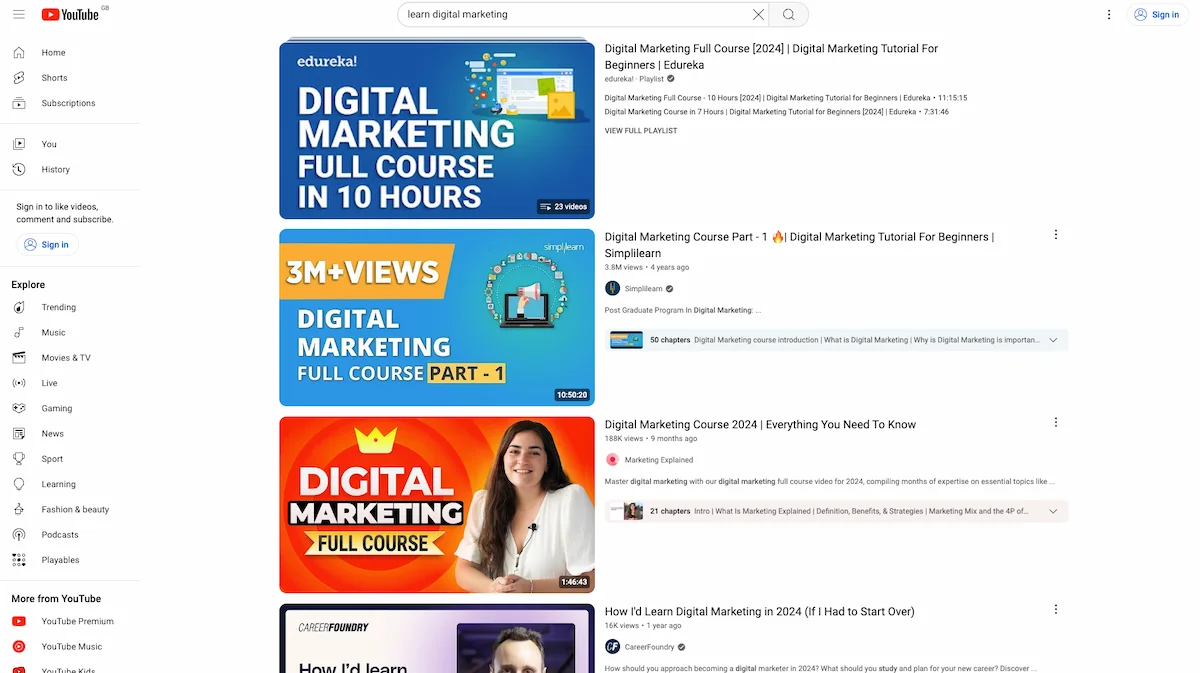
Once you’ve pinpointed your skills, it’s time to enhance and expand them. You really can learn a lot of this for free these days. Put yourself out there, talk to people, read blogs, watch YouTube videos, and follow people in your field on social media. You’ll build experience just by staying curious and paying attention, without needing to pay for a course to get started.
Your Portfolio Is Key
Although you may not have professional experience, you can still build a portfolio to showcase your abilities, and like we covered earlier, you don’t need past client work to do it.
Create sample projects or offer your services to friends or family at a reduced rate (or even for free) in exchange for testimonials and work samples. These early projects can help demonstrate your competence to potential clients.
Note: Offering a piece of work for free might help you get a testimonial or sample. But this is not sustainable, so don’t make it a regular thing.
The next step is to bolster your online presence by ensuring you appear in all the right places. Set up a professional social media profile, such as LinkedIn, and create profiles on other relevant platforms.
Do You Need Experience to Become a Freelancer?
You don’t need experience to become a freelancer. At least you don’t need freelancing experience. You will obviously need some sort of experience with the skill or niche you want to specialize in. If you don’t have any experience writing for example, it’s unlikely that you’ll make a good freelance writer (or want to become one in the first place).
But “experience” can often be misunderstood in this context. If you did a lot of great writing in school or university, then you might indeed be able to offer that as a service.
If you don’t have any formal experience as a graphic designer, but you love playing around with Adobe Illustrator or Canva, then maybe you could offer logo design services to businesses.
It’s not as clear-cut as you need a specific type or amount of experience to make it as a freelancer. Instead, it’s all about how well you can market the experience you do have.
Should You Start Freelancing?
Some people take to freelancing straight away. Others find the fast pace and lack of structure a real adjustment. Whether it’s right for you depends on a lot of factors, and honestly, you won’t fully know until you’re in it.
If it was me in your shoes, I’d think about whether I actually enjoy working under pressure and setting my own deadlines, because that’s the day-to-day reality of it. For some people that sounds like freedom. For others it’s stressful. It took hard work and a fair bit of trial and error for me, and it still does some days.
For more on this, check out my article on the downsides of freelancing.
And if you’re struggling to choose between career options, check out my guide to freelancing vs traditional employment.
Freelance Ready is reader-supported. That means some links on this website are affiliate links. If you sign up or make a purchase through these links, we may earn a commission.

Chris is the creator of Freelance Ready. He originally started freelancing (on Fiverr) while at university in 2019. He created this website to share his freelancing experience and help others on their own self-employed journeys. Chris now provides content consultancy for B2B SaaS brands, creating blog posts and YouTube videos. You can learn more about Chris here.