
I love being a freelancer. I’ve been grateful for it every day since I started back in 2019, and it’s given me freedom beyond my wildest dreams. It’s also helped me make far more money than I would in an equivalent job.
But man, there’s a lot I wish I’d known before I started. From the financial side of things to the isolation, there’s plenty that people don’t realize before they go down this path.
So this article covers everything I wish I’d known before I started freelancing.
1. You Need Something to Sell
Anyone can be a freelancer, but that doesn’t mean everyone should be.
If you want to be a freelance graphic designer, you need to know your way around design software and be able to produce great designs. Just wanting to create great designs isn’t enough to get people paying you straight away. You can build up your skills over time (I’m still improving every day), but you do need something to sell from day one.
You don’t necessarily need a deep understanding of the industry you want to work in. (I certainly didn’t when I started!) But there’s usually a direct link between how much you know and how much you can earn, how many clients you find, and how easy it is to land the next one. The more you know what you’re talking about, the easier all of it gets.
Further reading: Skills You Need For Freelance Writing
2. Freelancing Is Not a Get-Rich-Quick Scheme
Freelancing takes a lot of hard work and dedication, and it’s definitely not a way to make a quick buck. Plenty of people assume it’s an easy way to make money. In reality, it’s pretty challenging.
As a freelancer, you need to constantly hustle for work, market yourself, and manage your clients and projects all on your own. There’s no guaranteed income, and you need to be ready for the quiet months as well as the busy ones.
Here’s how my income looked a couple of years ago. Big high in August, followed by some of my lowest-earning months ever:
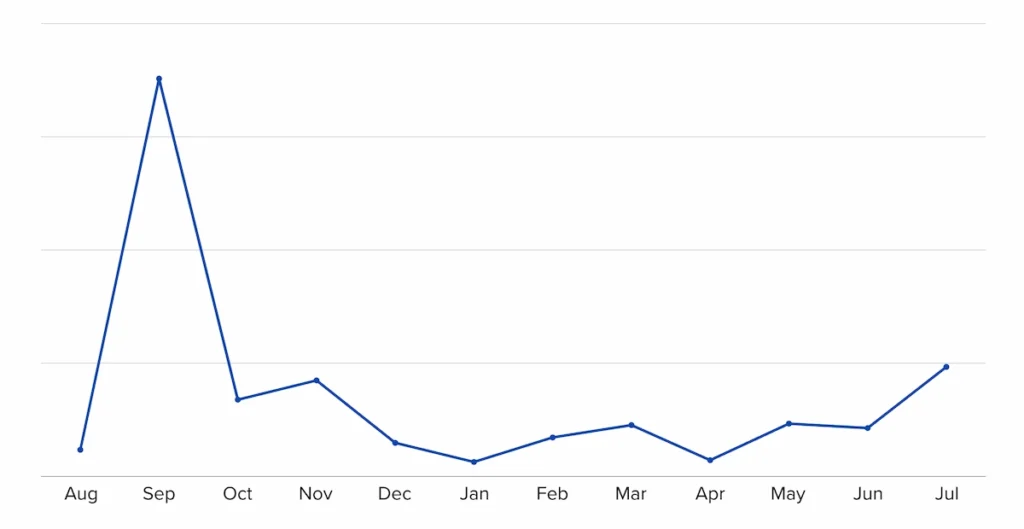
It also takes time to build a solid client base and a reputation in your industry. It can be months or even years before you’re properly established, and you may need other work to support you while you get there.
Speaking of income…
3. You Should Have a Financial Buffer
Before you rely on freelancing to pay your bills, you need a financial buffer: enough money set aside to cover your living costs while your income builds up.
I started freelancing in 2019 while I was still at university. I had a student loan and a part-time job alongside it, so I wasn’t fully reliant on my freelance income in those early days. It took many months before I could get by on freelancing alone, and having that safety net took a huge amount of pressure off. I could turn down bad-fit clients (although I rarely did) and take time to learn, instead of grabbing any work I could find just to grow my bank account.
If you can, start freelancing on the side while you still have another income source, and build up savings before you make the jump to full-time freelancing. Three to six months of living costs is a sensible starting point, and more is better if you expect your income to be patchy at first.
Use the calculator below to work out how much you need. Obviously exactly how much you’ll need depends on your specific situation, so this isn’t financial advice. Just a helpful starting point!
How big should your freelance buffer be?
Add up what it costs you to live each month, choose how many months you want covered, and see how much you need saved before you go freelance.
Three to six months is a common starting point. Go longer if your income will be patchy at first or clients pay 30+ days after you invoice.
You need
£0
Enter your monthly costs to see your target buffer.
4. You Probably Won’t Get Paid Immediately
Here's one that caught me out when I first started: completing the work and getting paid for it usually don't happen at the same time!
When I started out on Fiverr, there was a two-week delay between a client approving an order and the money actually landing in my account. These days, most of my clients pay 30 days after I invoice them (it's not uncommon for that to be 60 days). That means work I finish in January isn't paid for until March sometimes.
None of this is unusual, and once you’re set up with regular clients it all evens out. But you need to plan for it, especially at the start. Include payment delays in your buffer (see above), agree payment terms before doing any work, and chase overdue invoices!
5. You’ll Need to Register as a Business
At some point, you’ll need to make your freelancing official with your local tax authority. The good news is that it’s usually quick and easy, and you often don’t need to do it until you earn above a certain amount.
In the UK, you must register with HMRC once your self-employment income goes over the £1,000 trading allowance in a single tax year (6 April to 5 April). The deadline is 5 October following the end of the tax year in which you became self-employed. It takes a few minutes online, and you can register as a sole trader without setting up a limited company. (This is what I did when I started.)
In the US, you generally don’t need to register anything to start freelancing as a sole proprietor, though some states and cities require a business license. You’ll still owe self-employment tax if your net earnings from self-employment are $400 or more. Clients don’t withhold tax from what they pay you, so you may need to make estimated tax payments through the year.
(Things vary a lot from state to state, so check your local authority for specific info for your location.)
Wherever you are, set aside a portion of every payment for tax from the start, and keep basic records of your income and expenses. I’m not an accountant, so check the rules where you live, or speak to one if you’re unsure.
6. You Need to Be Active in Your Industry
New technologies, tools, and techniques are emerging all the time, and if you don't keep up with these changes, you risk falling behind your competition.
For example, AI has completely changed my industry, content marketing, over the past couple of years. I’ve stayed on top of it by listening to podcasts, reading books, and talking to people who are working with these tools every day. I've also used them myself, so I'm familiar with how they work.
That’s made a big difference to my writing and videos. Writing and talking about these topics has become so much easier because I already understand what’s happening and where things are heading.
The same applies whatever you do. If you’re a graphic designer working with emerging tools, you’ll have a much easier time if you know what’s coming before your clients ask about it. And you can use your cutting-edge knowledge and skills to impress them too.
You can stay active in your industry by reading industry publications, following experts on social media, listening to podcasts, and going to conferences and meetups. More on that later.
7. You Need to Have Self-Discipline
When you work for yourself, you’re your own boss. Woohoo!
But this means:
- There’s nobody keeping you on track
- No coworkers around you
- No set hours
Without self-discipline, procrastination and distractions can easily take over. And trust me, they will.
For me, having a dedicated space to work that isn’t my bedroom has made a massive difference. Setting clear boundaries between work time and personal time has made staying disciplined much easier too. That said, my wife and I recently had a baby, and my self-discipline hasn’t been at its usual levels since. (Will it ever recover?)
To stay disciplined, set clear goals and priorities for yourself. Create a daily or weekly schedule, give yourself firm deadlines, and break big projects into manageable chunks. All the usual stuff. Then, the important part: hold yourself accountable for hitting them.
Easier said than done, but you're gonna need to learn to do this if you're going to make it as a freelancer!
8. You Need a Reliable Way to Track Your Work
As a freelancer, you'll be juggling multiple projects and clients at once. This can quickly become overwhelming if you don't have a solid project management system in place (helpful for holding yourself accountable, which I just told you was key!). Without a system to keep you organized, it's easy to lose track of deadlines and deliverables. This can damage your reputation and cost you future business, yes, but it'll also just stress you out.
A good project management system should allow you to track all of your projects and tasks in one place, with clear deadlines and priorities for each.
I personally love Notion. I’ve used it since I started freelancing, and I use it for both my work and my personal life. But you can use anything that works for you, whether that’s Trello, a spreadsheet, or your phone’s notes and reminders apps. You just need some way of keeping track of everything, because it builds up fast.
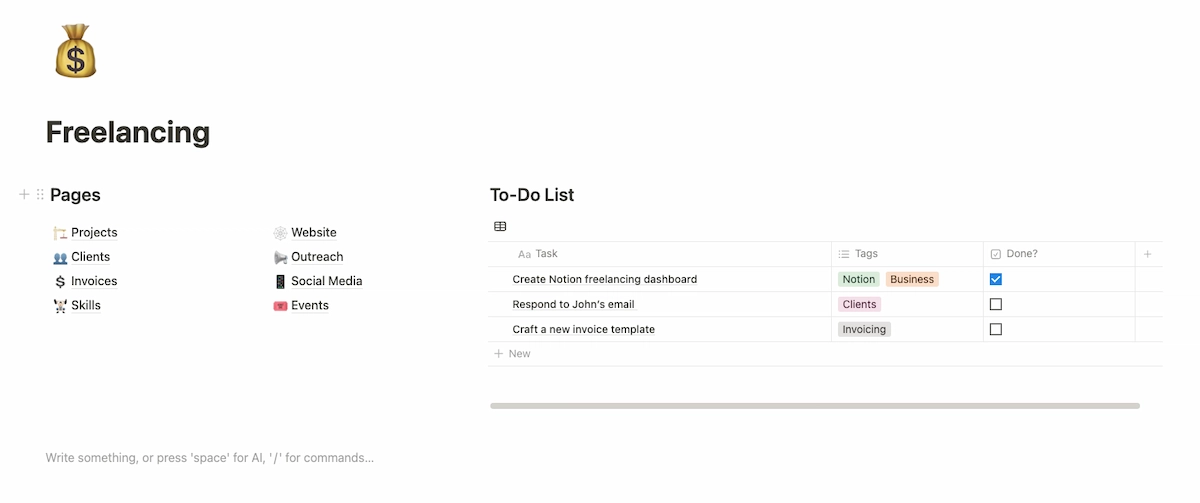
Whichever approach you choose, it's important to find a system that works for you and stick to it. This means setting aside time each week to review your projects and update your system, adding new tasks and deadlines as needed and checking off completed items.
Your system should also cover the admin side of things, like invoicing and tracking income and expenses for tax time. Accounting software like QuickBooks or FreshBooks can help, but a simple spreadsheet works fine when you’re starting out.
9. You Need a Clear Pricing Structure
A clear, transparent pricing structure is crucial if you want healthy, long-lasting client relationships. Clients want to know exactly what they’re paying for and what to expect. You need a pricing strategy that’s competitive, sustainable, and fair to both of you.
About two years ago, I lost a potential client before we’d even started working together, because I hadn’t been clear from the beginning about what they should expect and what it would cost. It was an easy mistake to avoid, and one I haven’t made since.
To work out your rates, you need to consider:
- Your skills
- Your experience level
- Industry standards
- Scope and complexity of the project
- The client's expectations
You should also factor in the time and effort each task takes, and think about whether hourly rates or project-based pricing suits you best. Your rates should go up as you build new skills and a stronger reputation.
That’s easier said than done at the start, because you probably have no idea what you should charge. But our freelance rate calculator can give you a rough idea to get started.
Agree clear payment terms upfront too, so there’s no confusion later (see “You Probably Won’t Get Paid Immediately” above). You can set deadlines for payments and determine the payment method that works best for you and your clients. Consider setting up a payment system via PayPal, Wise, or a bank transfer to make the process convenient and secure for all parties.
Further reading: Setting Rates As A Freelancer
10. You Need Strong Communication Skills
Communication is a really underrated part of freelancing. I believe it’s been crucial to my own success, since being able to tell clients clearly what I can and can’t do, and understanding exactly what they need from me in return, has saved me from countless headaches.
Good communication means explaining your ideas clearly and concisely, and actually listening to your clients’ needs and concerns. Open, honest communication builds trust, and trust is what keeps clients coming back.
As a freelancer, it is crucial to have exceptional communication skills to maintain healthy relationships with clients—and to find new ones. This involves being able to articulate your ideas clearly and concisely. And also actively listening to your clients' needs and concerns.
Fostering open and transparent communication with your clients is key to building trust and maintaining ongoing partnerships.
You’ll also need to write clear emails, proposals, and contracts that set out project details, timelines, and pricing.

You’ll need to negotiate too. I still don’t love negotiating, but once you’ve done it once, it’s so much easier to name a number the next time someone asks. The aim is to find a middle ground between what your client wants and what’s realistic for you. It can feel scary at first, but it pays off in the long run.
Further reading: Negotiating Freelance Rates
11. Networking Eventually Becomes Essential
Networking helps you find clients, learn about new opportunities, and build a reputation in your field. You are essentially your own business, and building a network of contacts can help you grow your client base and learn about new opportunities.
Networking can also help you build your reputation as an expert in your field. By attending events, you can showcase your expertise and knowledge while meeting new people. Which can lead to new clients and opportunities.
My first conference was Semrush Spotlight. Going really meant pushing myself out of my comfort zone, but I’m so glad I did it!

You don’t need to network in person, though. Online communities count too, like subreddits for your freelancing niche:
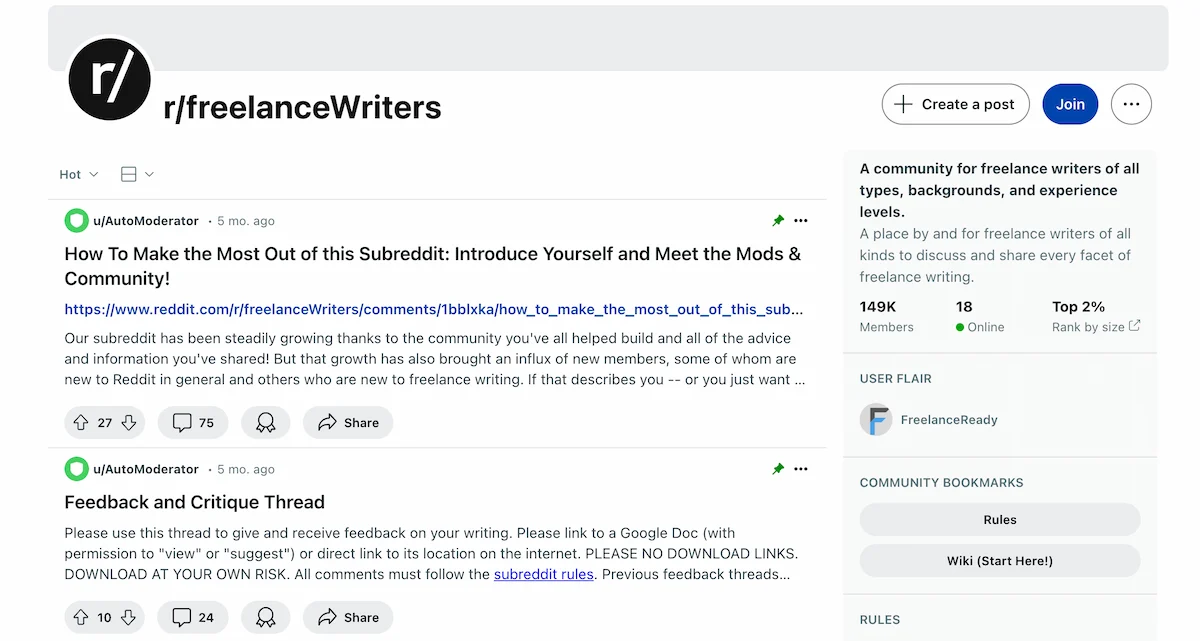
LinkedIn is also your friend. Connect with people in your industry, and you’ll find opportunities, make friends, and feel more confident. It’s something I’m working on with my own LinkedIn profile right now. Feel free to connect with me over there!
12. You Need a Strong Portfolio
Finally, your portfolio serves as a visual representation of your skills and capabilities, showcasing your best work and demonstrating your expertise. It can also provide potential clients with an idea of what they can expect from your services.
To create a strong portfolio, it's important to be intentional about the work you choose to include. Your portfolio should showcase a range of your abilities and accomplishments, as well as highlight your specific niche or area of expertise. It's also essential to include your most recent and relevant work, as this will give potential clients an idea of what you're currently capable of.
As you complete new projects (especially ones that show off new skills), be sure to add them to your portfolio and replace older or less relevant work. This will ensure that your portfolio remains fresh and showcases your most recent and compelling work.
Your portfolio doesn’t have to be anything fancy. A LinkedIn profile or an Instagram account can do the job, as long as it shows people what you’re capable of. If you don’t have past clients yet, create your own sample work to show off your skills.
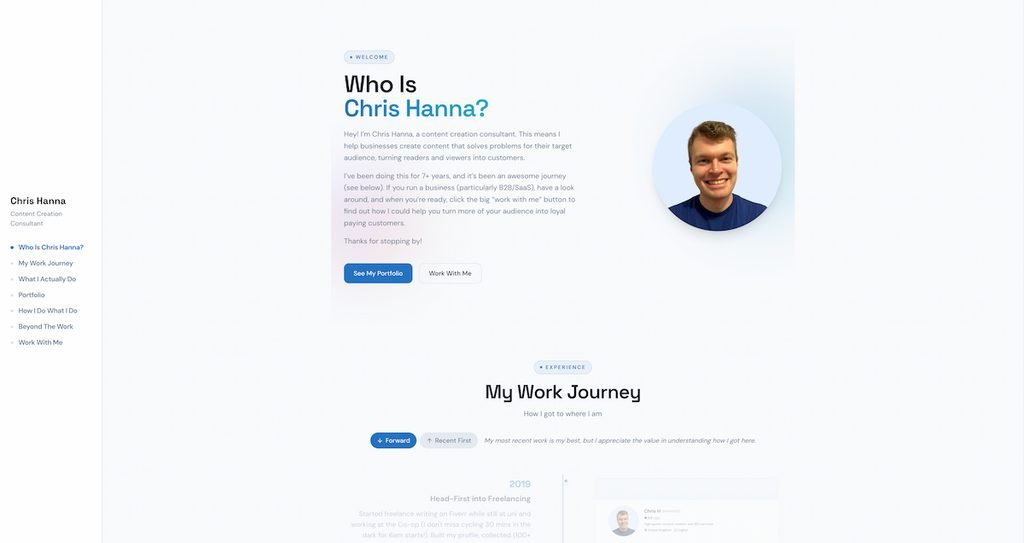
If you’d like your own website, AI tools let you build one easily without any programming experience. I built my own, and you can see it here:
There's a Lot to Know Before You Go Freelance
There is a lot to learn before you start freelancing (including some hidden downsides).
But if you take one thing away from this article, make it this: get your financial buffer in place before you make the jump. With a few months of breathing room, you can make better decisions about clients, pricing, and how you spend your time, and the rest of this list gets much easier to learn as you go.
Freelance Ready is reader-supported. That means some links on this website are affiliate links. If you sign up or make a purchase through these links, we may earn a commission.

Chris is the creator of Freelance Ready. He originally started freelancing (on Fiverr) while at university in 2019. He created this website to share his freelancing experience and help others on their own self-employed journeys. Chris now provides content consultancy for B2B SaaS brands, creating blog posts and YouTube videos. You can learn more about Chris here.